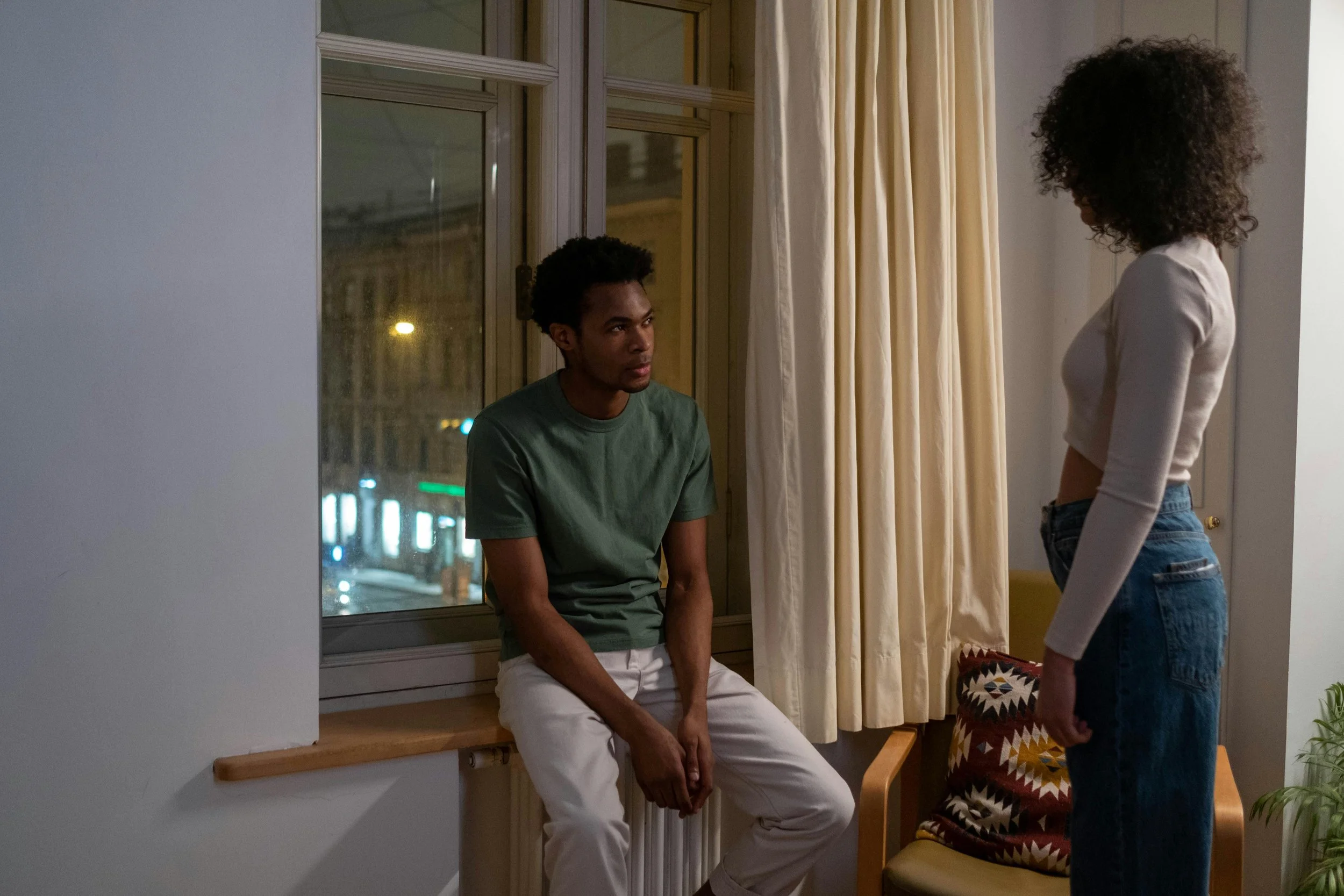
Here’s a scenario that comes up a lot: something happens between a couple — a disagreement, a hurtful comment, some kind of rupture, big or small — and afterward, one partner wants to talk about it. Like, really talk about it. Process it, understand it, make sure it’s resolved. And the other partner’s instinct is more like… can we just move past this? Do we have to keep talking about it?
I think about a couple where this was almost a running joke between them — except it wasn’t really funny, because it kept causing problems. After any kind of conflict, she wanted to talk it through — sometimes for what felt like a long time, to him — and he wanted to just… be done. Not in a dismissive way, exactly. He just felt like once an issue was addressed, talking about it more just kept it alive, when what he wanted was for it to be over.
To her, his desire to move on quickly felt like he didn’t take things seriously — like he just wanted to sweep things under the rug. To him, her desire to keep talking felt like she wouldn’t let things go — like nothing was ever really resolved, because there was always more to process.
Both Instincts Make Sense
I think it’s really important to say: both of these instincts come from a real place, and neither of them is “wrong.”
For people who want to talk things through extensively, it’s often because processing — putting feelings into words, going over what happened, making sure they’re understood — is how they actually come to feel resolved. Without that processing, the feelings don’t really go anywhere; they just sit there, unresolved, even if the conversation has technically “ended.”
For people who want to move on more quickly, it’s often because, for them, dwelling on something — talking about it over and over — can actually make it feel bigger, not smaller. They may process things more internally, and for them, continuing to talk about something after a certain point doesn’t feel like resolution — it feels like reopening something that’s already closing.
Neither way is more mature, or more healthy, on its own. They’re just different processing styles — and like a lot of differences in relationships, they can clash in ways that leave both people feeling unseen.
What This Looked Like for This Couple
For this couple, what helped wasn’t either of them abandoning their natural style. It was finding something like a middle path — with a bit of structure.
They started doing something like this: after a conflict, they’d agree to talk about it — but with something like a loose time frame in mind, rather than an open-ended conversation. This gave her the processing she needed, while also giving him a sense that there was an endpoint, which made it easier for him to stay present instead of just waiting for it to be over.
They also started checking in with each other partway through — something like, “is this feeling like enough, or do you need more?” — which sounds simple, but it meant neither of them was guessing about what the other needed. She didn’t have to wonder if she was “talking too much,” and he didn’t have to wonder if cutting things short would leave her feeling dismissed.
The Goal Isn’t to Become the Same
I want to emphasize again — the goal here wasn’t for either of them to become like the other. She didn’t need to become someone who could just “let things go” quickly, and he didn’t need to become someone who wanted to process everything extensively. The goal was for both of their natural styles to have room to exist — without either one feeling like it was steamrolling the other.
If This Pattern Feels Familiar
If you and your partner have different styles around processing conflict — one of you wanting to talk things through more, the other wanting to move on more quickly — I want you to know this is incredibly common, and it doesn’t mean either of you is doing relationships “wrong.” It usually just means you have different ways of getting to the same place: feeling like something is actually resolved, not just paused.
Finding a way to honor both styles can make a real difference — and if it would help to have some support figuring out what that could look like for the two of you, I’d be glad to help. Feel free to reach out for a free consultation.